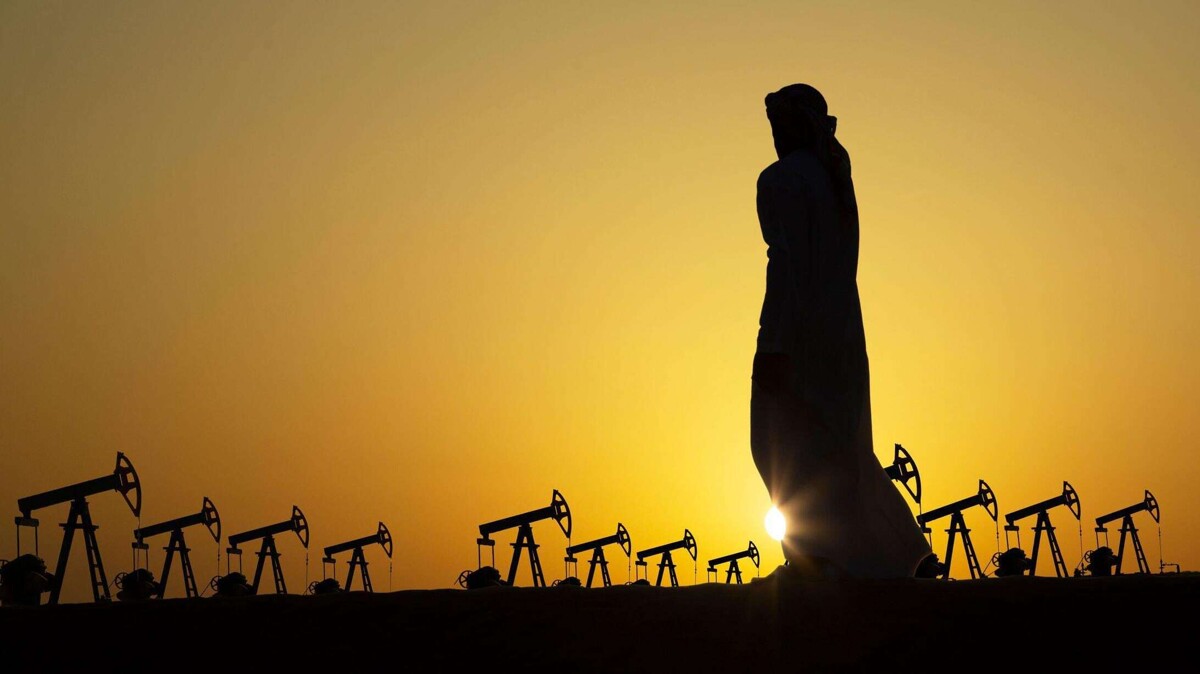
The Persian Gulf region is home to colossal reserves of oil and gas. There are more than 30 supergiant fields, each containing 5 billion or more barrels of crude oil, around the Persian Gulf. Wells in the region produce two to five times more oil daily than even the best fields in the North Sea and Russia.
Modern geoscience has identified several key factors in the rocks that make a region particularly rich in oil, including its capacity to generate and retain hydrocarbons. In the Persian Gulf region, all these factors are at optimal or near-optimal levels. Due to its immense abundance and ease of production, the Persian Gulf region is simply unmatched.
A Brief History Humans knew of the presence of hydrocarbons in the area long before the floods created the Persian Gulf at the end of the last Ice Age, between 14,000 and 6,000 years ago. Natural seepages of crude oil and gas are common along rivers and valleys in many parts of the region. Thousands of years before the start of the Common Era, peoples used bitumen, a heavy type of oil, to make mortar and waterproof boats. The first modern oil discovery occurred in 1908 at a known seepage site in western Iran. In the 1950s and 60s, an era of rapid oil and gas exploration expansion, it became clear that no other region on the planet would have such abundance.
Other zones with enormous volumes of oil and gas have been discovered, such as western Siberia in Russia and, more recently, the Permian basin in the United States, but none compare to the magnitude of the reserves in the Persian Gulf, nor the high rate at which oil and gas can be produced in this region.
Geological Setting The Persian Gulf region is located where two tectonic plates collide: the Arabian plate to the southeast and the Eurasian plate to the east and north. This collision has been happening for about 35 million years and has resulted in a dynamic setting where rock layers have been folded and broken, and at deeper levels, transformed by considerable heat and pressure. The geological features differ considerably on both sides of the Gulf.
Rocks that Produce Oil Crude oil and gas are formed from organic material like marine zooplankton and phytoplankton, originally concentrated in shale, mud-rich limestones, and other rocks exposed to high temperatures and pressures. When rocks are composed of at least 2% organic material, they are considered high-quality for oil and gas generation. The Persian Gulf region has a particularly high number of these source rock layers, some of which are especially thick, abundant, and organically rich.
Oil and Gas Structures The folded and fractured rock layers of the region, and its domes, are well-suited to trap hydrocarbons. The folds of the Zagros, a legendary mountain range among geologists, contain hundreds of billions of barrels of oil and billions of cubic meters of gas. A quick look at an oil and gas map of the Persian Gulf region will show fields shaped like sausages running from northwest to southeast, reflecting major folded structures. These features include hundreds of individual fields of varying sizes, extending from southern Iran through northeastern Iraq.
On the Arabian plate, large dome structures have formed especially enormous accumulations of oil and gas. Beneath the Persian Gulf lies a basin filled with sediments eroded from the rising Zagros Mountains. Using horizontal drilling and fracking techniques developed in the U.S. could allow for more oil and gas to be produced. It is still too early to know how successful they would be, but studies indicate they could generate even more production.